If you have ever watched a dancer seamlessly transition from a graceful turn into a backbend or cartwheel, you have seen acro dance in action. It is one of the most exciting and dynamic dance genres — and at All That Jazz, it is one of our fastest-growing programmes. But what exactly is acro dance, and why is it such a valuable addition to your child's training?
Acro Dance: The Perfect Fusion of Dance and Acrobatics
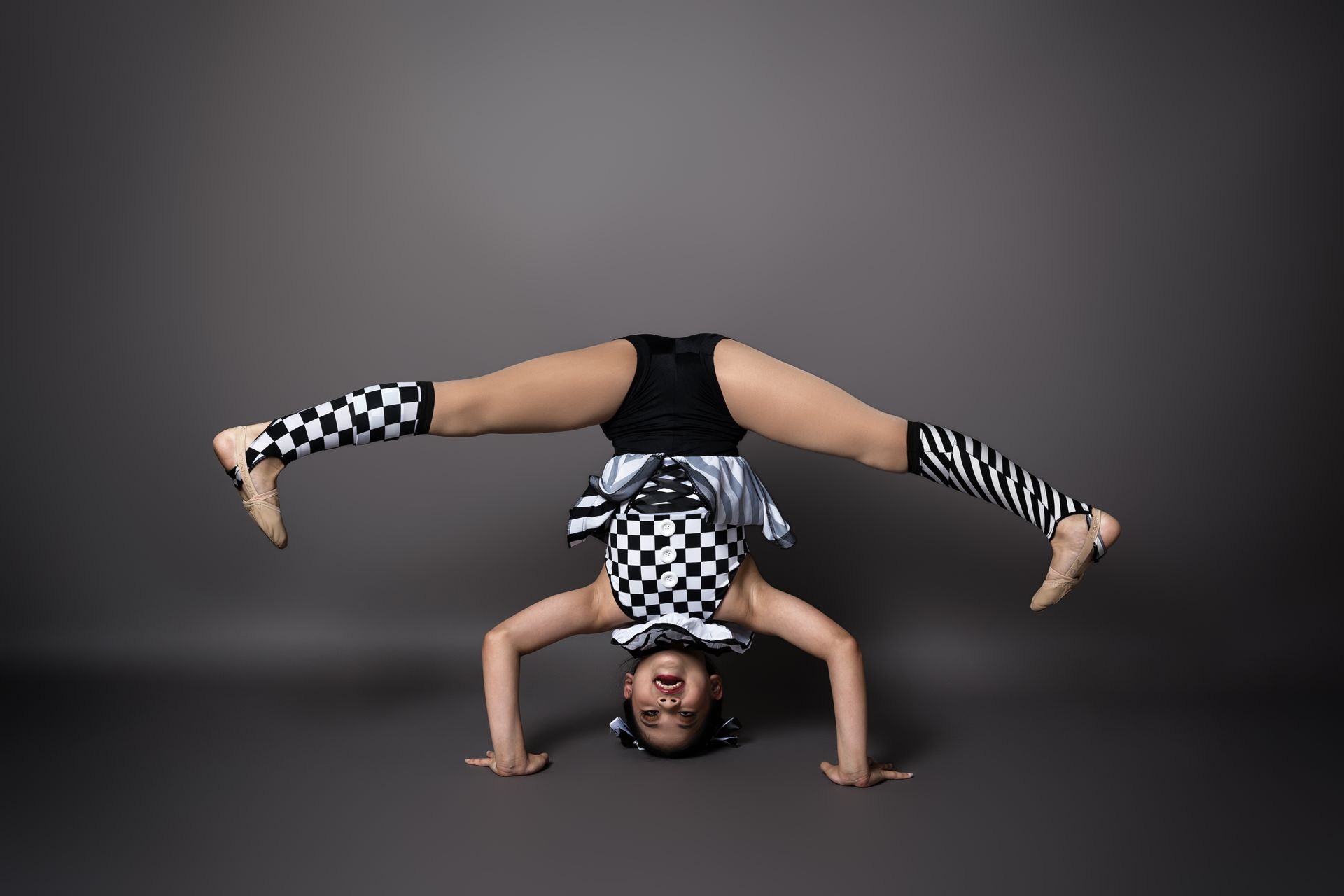
Acro dance is a unique blend of classical dance technique and acrobatic elements. It creates fluid transitions between elegant dance movements and impressive skills like balances, rolls, handstands, bridges, and tumbling passes. Unlike gymnastics, acro dance emphasises musicality, artistic expression, and the seamless integration of skills into choreography. Every movement tells a story, combining strength with grace. The key elements of acro include flexibility, strength, balance, tumbling, limbering, and partnering — all taught within a dance context rather than a purely athletic one.
How Our Acro Programme Works
At All That Jazz, our acro programme follows the Acro Dance Teacher Association (ADTA) syllabus — a structured, safety-first framework that takes students from beginner levels through to advanced work. The programme is led by our Head of Acro, Bryan Rodriguez Montoya, and supported by a team of experienced instructors. Classes are organised by age and skill level, starting from Mini Acro for ages five to six, through Pre-Junior, Beginner, Junior levels, and up to Pre-Intermediate and Intermediate for more advanced students. Progression is based on skill mastery rather than age alone, which means every student advances at a pace that is safe and appropriate for them.
What Makes Acro Different From Gymnastics?
This is one of the most common questions parents ask. While acro and gymnastics share some skills — cartwheels, handstands, bridges — the approach and purpose are quite different. Gymnastics focuses on athletic performance: power, speed, and scoring. Acro dance focuses on artistry: how those skills look within choreography, how they connect to music, and how they express a character or mood. In our acro classes, students learn to perform skills with dance quality — smooth transitions, musical timing, and performance expression. The ADTA framework ensures that every skill is taught with proper technique and safety as the top priority.
The Physical and Emotional Benefits
Acro dance offers an impressive range of developmental benefits. Physically, students build comprehensive strength across their core, upper body, and lower body. Flexibility, balance, and coordination all improve progressively. Joint mobility and body awareness develop through controlled exercises and skill training. Emotionally, acro is incredibly confidence-building. Mastering a new skill — whether it is holding a bridge or nailing a cartwheel — creates a powerful sense of achievement. Students learn perseverance, patience, and the value of consistent practice. Partner work and group exercises develop communication, trust, and cooperation.
Examinations and Progression
All That Jazz offers ADTA acro examinations twice a year, typically in March and November. Exams are conducted in a class setting by a certified examiner, making the experience supportive rather than stressful. Students receive detailed feedback and grading — with levels including Pass, Commended, Excellent, and Distinction. These examinations are a great way for students to set goals, track their progress, and celebrate their achievements.
Frequently Asked Questions
Q: What is the difference between acro dance and gymnastics?
A: Acro dance integrates acrobatic skills into choreography with a focus on artistry, musicality, and performance quality. Gymnastics focuses primarily on athletic performance and scoring.
Q: What age can my child start acro at All That Jazz?
A: Our Mini Acro class starts at age five. Students progress through Pre-Junior, Beginner, Junior, and Intermediate levels based on skill mastery.
Q: Does my child need gymnastics experience to start acro?
A: No prior experience is needed for our beginner levels. For more advanced classes, some foundational skills like cartwheels and bridges may be required.
Q: How often are acro exams held?
A: ADTA examinations are held twice a year at All That Jazz, typically in March and November. Exams are conducted in a supportive class environment.
Q: Is Acro dance safe for children?
A: Safety is our top priority. Our programme follows the ADTA framework, which emphasises proper technique, progressive skill development, and safe spotting practices. Students only advance when they demonstrate mastery and readiness.
Ready to Get Started?
All That Jazz Dance Academy has five studios across Singapore — in Orchard, Upper Bukit Timah, Katong, Claymore Hill, and Prinsep Street. We offer trial classes so your child can experience the magic before committing. Contact us on WhatsApp at +65 6974 9928 or email us at admin@allthatjazz.com.sg to book a trial class, or get in touch with our team. We would love to welcome your family into our community.