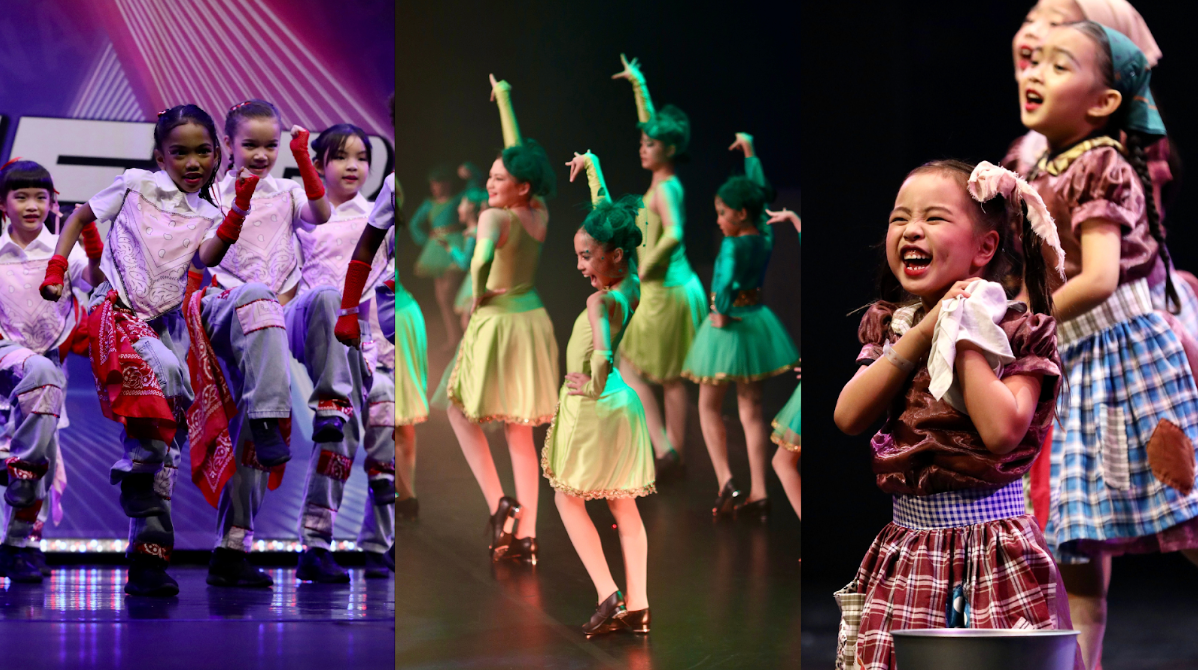
If you are looking at ballet classes in Singapore for your child, you have probably come across a few different syllabus names — ISTD, RAD, and CSTD. Each represents a different examination body with its own approach to teaching and assessing ballet, and the differences matter more than you might think. At All That Jazz Dance Academy, we teach the ISTD Imperial Ballet syllabus — a specific and highly regarded ballet programme from the Imperial Society of Teachers of Dancing. Here is a closer look at what that means, what makes it special, and how it sits alongside the alternatives.
What Are ISTD, RAD, and CSTD?
All three are internationally recognised examination bodies that offer ballet syllabi used by dance schools around the world. Understanding what each one stands for helps explain why we made the choice we did.
The Royal Academy of Dance (RAD) is probably the most well-known, particularly in the UK and Commonwealth countries. Founded in 1920, RAD offers its own classical ballet syllabus — structured, progressive, and widely respected. It is one of the most commonly used ballet syllabi in Singapore.
The Commonwealth Society of Teachers of Dancing (CSTD) originated in Australia in the 1930s and has grown into a respected international body across the Asia-Pacific region. It offers a Classical Ballet syllabus alongside other genres, and has a strong presence in Australia, Southeast Asia, and the wider Commonwealth.
The Imperial Society of Teachers of Dancing (ISTD) is one of the oldest dance examination bodies in the world, founded in 1904. While the ISTD covers many dance genres as an organisation, what we use at All That Jazz specifically is the ISTD Imperial Ballet syllabus — a classical ballet programme with a long history, rigorous standards, and global recognition spanning more than 80 countries.
Why We Chose the ISTD Imperial Ballet Syllabus
The ISTD Imperial Ballet syllabus was chosen for its emphasis on both technical precision and artistic development. It is not a syllabus that simply teaches steps — it trains students to move with intention, musicality, and quality. The Imperial Ballet approach places strong emphasis on correct alignment, coordinated port de bras, musical phrasing, and developing a genuine understanding of classical style. These are qualities that serve students well no matter where their dance journey takes them.
We also made a deliberate choice to be different. In Singapore, RAD is the most commonly taught ballet syllabus — and while it is a fine programme, it means that many students across many schools are working from the same material, progressing through the same steps, and developing in broadly the same way. At All That Jazz, we wanted to offer something distinct — a syllabus that delivers exceptional results while preparing students in a way that sets them apart. The ISTD Imperial Ballet syllabus does exactly that, and our students go on to pursue dance at an international level, including further study at colleges abroad, which speaks to the quality and global recognition of the training they receive here.
What makes this syllabus truly distinctive, however, is how it trains not just the body but the mind. A significant portion of the work at every level is built around free work. At each grade, students are introduced to a specific set of terminology and steps relevant to that level — and it is precisely those steps that form the basis of free work exercises, set work, and examination content. Because the material can be presented in any number of combinations and contexts, students cannot simply memorise a fixed routine and perform it on autopilot. They must genuinely know their material, because during examinations they may be asked on the spot to demonstrate terminology or execute set work based entirely on verbal cues from the examiner. There is no hiding behind repetition. The knowledge has to be fully internalised.
This begins from a surprisingly young age. Even at the primary levels, students are challenged to perform familiar steps in different ways — from the corner, around a circle, facing a partner — rather than always travelling in the same direction across the same space. These early experiences of spatial awareness and adaptability lay the groundwork for a dancer who is genuinely versatile, not just technically trained.
This free work philosophy shapes how we teach at All That Jazz. Our teachers approach each week with fresh exercises and varied combinations, ensuring students are prepared for any scenario they might face — not just the predictable ones. It keeps both teachers and students genuinely engaged, and it builds a kind of mental agility that extends well beyond the studio. The result is students who pick up new choreography faster, absorb corrections more readily, and adapt quickly when they attend masterclasses, workshops, or work with a new teacher for the first time. That ability to listen, process, and respond — to truly think on their feet — is one of the most valuable things a young dancer can develop, and the ISTD Imperial Ballet syllabus builds it into the training from the very beginning.
T he syllabus is also internationally recognised across more than 80 countries, which means the examinations students take at All That Jazz carry weight far beyond Singapore. For families who may relocate, or for students who want their training credentials to be portable, this matters enormously.
Importantly, the versatility our students develop does not come from the ISTD syllabus alone — it comes from All That Jazz's approach to combining it with other programmes. We pair our ballet training with the ADAPT syllabus for jazz and tap, Rambert Grades for contemporary, and other internationally recognised frameworks for musical theatre, acro, and street dance. The ISTD Imperial Ballet syllabus forms the classical foundation; the breadth of our overall programme is what makes our students truly well-rounded.
How It Differs from RAD and CSTD
RAD and CSTD are both respected programmes, and we want to be clear: this is not a question of one syllabus being better than another. Both produce strong, technically accomplished dancers, and schools that teach either programme are offering their students something of genuine value.
The reason we have chosen the ISTD Imperial Ballet syllabus is its particular nature — the way it builds a dancer not just physically, but mentally. RAD is structured and thorough, with a well-established network in Singapore and a clear progression through grades. CSTD is a credible and solid choice, particularly within the Asia-Pacific region where it has a meaningful presence.
Where the ISTD Imperial Ballet syllabus stands apart for us is in three key areas. First, its global reach — ISTD qualifications are recognised across more than 80 countries, giving students a truly internationally portable credential. Second, its depth of assessment — the examination criteria and marking standards are highly detailed, with clear expectations at every grade level. And third, its free work philosophy — the expectation that students understand and can apply their training spontaneously, not just reproduce choreography they have drilled. This cognitive dimension is what distinguishes the ISTD Imperial Ballet experience, and it is the reason we believe so strongly in it as the foundation of our training.
There is also a strong emphasis on artistry that grows with the student. At the higher levels, the artistic demands of the ISTD Imperial Ballet syllabus are significant — students are expected to perform with genuine expression, musicality, and style, not simply technical accuracy. But even at the youngest levels, that artistic sensibility is being cultivated. The variety of spatial challenges, the ever-changing context of free work, and the expectation that students engage thoughtfully with the material — all of this builds a dancer who feels the music, inhabits the movement, and performs rather than just executes. This is something we take great pride in, and it becomes more and more apparent as students advance through the grades.
The Real-World Benefits for Your Child
Choosing the right ballet syllabus is not just an academic decision — it shapes how your child develops as a dancer, and as a thinker. The ISTD Imperial Ballet syllabus builds excellent foundational technique: correct posture and alignment, coordinated arm and leg work, musical awareness, and the physical discipline that transfers into all other forms of movement.
At the same time, the free work structure builds genuine mental agility. Because students are consistently asked to apply what they know in new ways — different directions, different combinations, different contexts — they develop the ability to absorb and respond to new information quickly. This pays dividends far beyond the examination room. Students who have trained in the ISTD Imperial Ballet syllabus consistently demonstrate a faster uptake at workshops and masterclasses, adapt more readily to new choreography, and carry themselves with a confidence that comes from truly knowing their craft.
Combined with our ADAPT jazz and tap training, students build rhythm, performance confidence, and dynamic expression alongside their classical technique. This pairing — ISTD Imperial Ballet for classical rigour and cognitive development, ADAPT for energy and versatility — is at the heart of what makes All That Jazz training so effective.
What This Means at All That Jazz
At All That Jazz, our ballet classes follow the ISTD Imperial Ballet syllabus from our earliest levels through to our senior grades. Our teachers are trained to deliver the syllabus in a way that is age-appropriate, engaging, and technically rigorous — keeping the joy of dance front and centre while building the foundations students need to progress. Each week, our teachers develop varied exercises and fresh combinations to ensure students are truly prepared — not just for examinations, but for whatever comes their way as dancers.
From our Little Movers programme for children as young as two, through to our senior ballet grades, every student follows a clear, internationally recognised pathway with meaningful benchmarks along the way. We are proud to offer something different — and we are proud of the results it produces.
Frequently Asked Questions
Q: What is the ISTD Imperial Ballet syllabus?
A: The ISTD Imperial Ballet syllabus is a classical ballet training and examination programme from the Imperial Society of Teachers of Dancing (ISTD), one of the world's oldest dance examination bodies, founded in 1904. It is recognised in more than 80 countries and is known for its emphasis on technique, artistry, musicality, and a free work approach that develops both physical and mental agility.
Q: Does All That Jazz use the ISTD syllabus for other dance styles, not just ballet?
A: No. At All That Jazz, we specifically use the ISTD Imperial Ballet syllabus for our ballet programme. Our jazz and tap classes follow the ADAPT syllabus, contemporary follows Rambert Grades, and other programmes have their own dedicated examination frameworks.
Q: Is ISTD Imperial Ballet better than RAD or CSTD?
A: No single syllabus is objectively better — all three are respected and produce strong dancers. We chose the ISTD Imperial Ballet syllabus because of its particular philosophy: the way it builds dancers not just physically but mentally, through a free work structure that demands genuine understanding and real-time application of knowledge. It also aligns with our belief that offering something distinctive — rather than following the crowd — leads to better, more well-rounded dancers.
Q: My child is already doing ballet under RAD or CSTD. Will they join the same grade level at All That Jazz?
A: This is a question we hear often, and it is an important one. The ISTD Imperial Ballet syllabus tends to introduce more technically challenging steps at an earlier stage compared to RAD and CSTD. This means that grade levels are not a direct like-for-like comparison across syllabi. A student who has been training at Grade 4 RAD, for example, may find that they are more comfortably placed at Grade 3 in the ISTD Imperial Ballet syllabus — not because their training has been inadequate, but simply because the progression structures are different. This is not a reflection of ability; it is a natural result of how the ISTD syllabus is built. We always assess students individually when they join us, so we can place them at the level where they will thrive and build confidence — rather than one where they may feel underprepared.
Q: Why does the free work approach matter outside of class?
A: Students trained in the ISTD Imperial Ballet free work approach consistently demonstrate a faster ability to pick up new material — whether at workshops, masterclasses, or when learning choreography from a new teacher. Because they have been trained to listen, process, and respond rather than simply repeat, they are genuinely more adaptable dancers. This is one of the most practical and lasting benefits of the ISTD approach, and one of the reasons we are so committed to it.
Q: Can my child take exams in the ISTD Imperial Ballet syllabus?
A: Yes. Students at All That Jazz can take ISTD Imperial Ballet examinations as part of their training progression. These are internationally recognised across more than 80 countries and provide a clear benchmark of your child's development at each grade level.
Q: What age can my child start ISTD Imperial Ballet training?
A: Children can start as young as two in our Little Movers programme, which introduces foundational movement skills that lead into ISTD Imperial Ballet syllabus work from the Mini level onwards.
R eady to Get Started?
All That Jazz Dance Academy has five studios across Singapore — in Orchard, Upper Bukit Timah, Katong, Claymore Hill, and Prinsep Street. We offer trial classes so your child can experience the magic before committing. Contact us on WhatsApp at +65 6974 9928 or email us at enrolment@allthatjazz.com.sg to book a trial class, or get in touch with our team. We would love to welcome your family into our community.